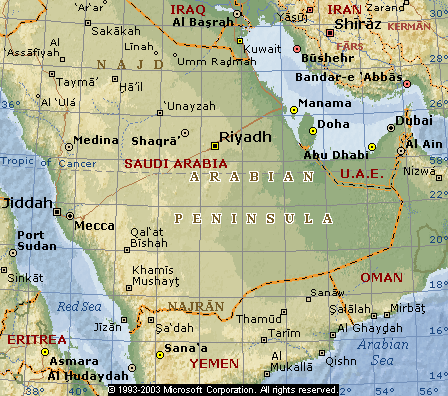
2. Is a monarchy founded by Abdul Aziz ibn Saud and government guided by conservative Islam which is the official religion
3. Ibn Saud between 1902 and 1932 formed7. 23% of people are foreign, but most are Arab and Arab is official language though English is also important
8. Has major improvements in education, 68% of people suppose to be enrolled in primary or secondary school enrolled
9. Women very conservative role and family focus of life
10. Mainly eat rice with lamb or chicken
B.5. Most speak Arabic, though there are many dialects
6. Religion mostly Muslim, but the struggle between Sunnis and Shiites made Shiites, originally powerful, reduced to living in mountains
7. Very few females in school
8. Male might wear jambiyya, a type of dagger, and skirt with straw hat or head cloth
9. Women might wear robes, shawls, and veils
10. Diet mostly of rice, bread, vegetable, fish, and lamb
11. Highland people sometimes live in fancy stone or mud brick houses while city-dwellers modern houses or flats
12. 1993 had elections that included women, before, North had militant authoritarian regime and South had centralized socialist party-state
C.5. Great deal of malaria
6. Omani Arabs account for 75 percent
7. Arabic main language, English and Asian languages also highly spoken
8. Muslims majority religion and 88% of people
9. Free education, 40% literate
10. Live in extended families and arranged marriages between 1st cousins when possible
11. Most people live in modern homes
12. Diet mostly fish, sheep, goat, rice, and dates
13. Has a Sultan with most of the power, though there are advisory groups, also tries to have separation between government and economics
D.5. 4/5 of population are foreign immigrants or their dependents
6. Has young population, like for large families, and good medicare
7. Non-Arab people are Asians or Iranians
8. Has Religious freedom though Islam is official religion and Arab is official language, though English, Hindi, Urdu, and Persian are also prominant
9. Pretty relaxed culturally, probably because so many foreigners
10. Women's clothe of black abaya and a face mask called the burka are sometimes abandoned for more Western style, and traditional food of grilled lamb with spiced rice sometimes abandoned for Western fast foods
11. Houses usually modern with air conditioning
12. Very little poverty because the Sheik spends lots of money on welfare
13. Have different branches like U.S. in government, but power is still hereditary
E.5. Arabic official language though English used in commerce and government
6. Most people follow Islamic Wahhabi sect
7. Is a monarchy, and since 1970, has had a Council of Ministers that have executive power
F.7. Sunnis outnumbered by Shiites (70%), an unusual occurrence
8. Most people native: 63%
9. 92% people live in urban areas
10. 89.1% literacy, higher in males than females and education free
11. Merchants dominant and Islamic values govern
12. Most women not leave home, though some in urban areas have given up the traditional veil
13. Lamb, fish, rice, and dates usually eaten at home, outside, can get Western food
14. Celebration of birth and marriage important
G.
6. Operates under constitutional monarchy
7. Has air pollution and major enviromental problems as a result of Parisian Gulf War
8. Most of population live in cities along Persian Gulf Coast
9. 45% population native, rest are foreign and relationship between two are strained
10. Good health care and social services allow for big population
11. Arab official language though both it and English taught in schools, Islam official religion and all citizens are Muslim
12. Most people use Western calendar out of necessity, but go by Islamic calendar
13. 84% literate, built by oil money, and lots of government supported aids
14. Family really important and private life really private, some have separate structure to receive guests in
15. Women usually in house and men usually in guest recieving room, revealing cloths frowned upon
Sherry Zhou